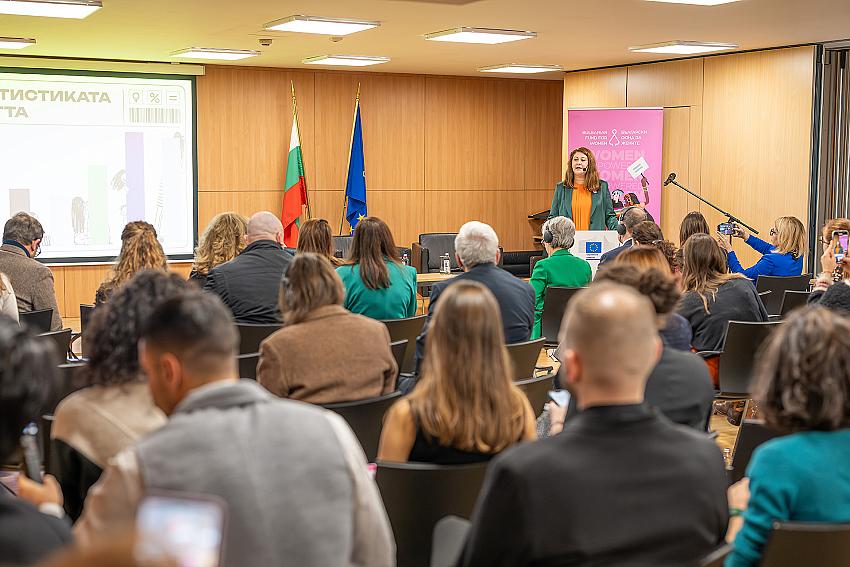
On 10 December 2025, the International Human Rights Day, the Law and Internet Foundation had the pleasure of attending a conference of profound importance - the fight against domestic violence in Bulgaria. The event, titled “Between Statistics and Reality: Domestic Violence in Bulgaria Beyond the Numbers”, was organised by the Bulgarian Fund for Women (BFW) and the European Union Agency for Fundamental Rights (FRA) as part of the UN international campaign “16 Days of Activism Against Gender-Based Violence.”
Speakers included high-level public figures and experts: among them were the Vice President of Bulgaria, the Ombudsman, and representatives from FRA - notably Joanna Goodey, Head of FRA’s Justice, Digitalisation and Migration Unit, as well as civil-society leaders from BFW. Data presentations were delivered by Mrs. Joanna Goodey, FRA expert Mr. Sami Nevala, and domestic-policy consultant Blagorodna Makeva. Experts, public officials, and representatives of civil-society organisations contributed with insights from their work on the ground, stressing the need to strengthen services for survivors, improve prevention mechanisms, and ensure that policies are informed by both statistical evidence and lived experience.
The discussions focused on bringing attention to the stark contrast between official figures and the real scope of domestic violence cases in the country. FRA presented newly gathered European and national data, illustrating where Bulgaria stands in comparison to other EU member states and highlighting continuing under-reporting and gaps in institutional response. A particularly eye-opening part of the conference dealt with societal perceptions of violence - experts noted that many people in Bulgaria do not fully recognise certain behaviours, especially some forms of sexual abuse and non-physical violence, as “real” violence. This lack of awareness, combined with the widespread belief among a substantial share of the population that “domestic violence is a private matter to be handled within the family”, was identified as a major reason behind the low official reporting rates.
Representatives from civil society and public institutions stressed that these cultural attitudes constitute one of the biggest obstacles to effective prevention and support: victims may stay silent, abuse remains unreported, and public discourse remains inadequate. The panel thus highlighted the urgent need for educational campaigns, awareness-raising, and structural reforms to shift the narrative, emphasising that violence is never private when human rights are at stake.
The conference served as an essential forum for aligning knowledge with action, reinforcing the need for collective commitment to protect and empower those affected. The Law and Internet Foundation supports these efforts and remains dedicated to contributing to initiatives that strengthen prevention, ensure access to justice, and uphold the rights and dignity of survivors of domestic violence.